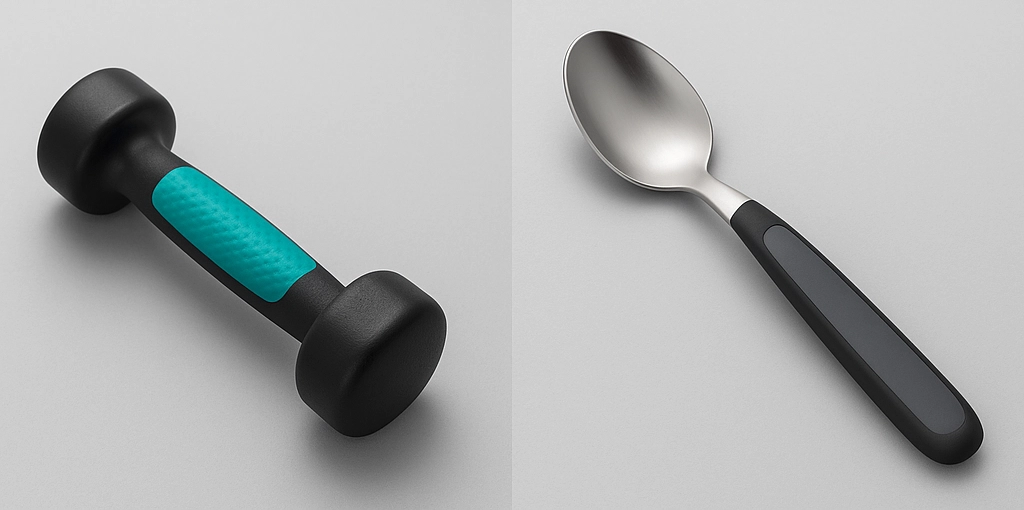

What is Overmolding? (Secondary Injection)
Enhancing product performance through multi-material integration.
Overmolding (often referred to as 2-shot molding or insert molding) is an injection molding process where a soft elastomer (typically TPE/TPR) is molded over a rigid substrate (engineering plastics such as ABS, PP, PC, PA, or Nylon). This process is designed to improve ergonomics, slip resistance, aesthetics, and structural integrity.
The Manufacturing Process
Drying: Proper pre-heating of TPE/TPR resin.
Pre-treatment: Degreasing and moisture removal of the rigid part.
Parameter Setting: Optimizing injection speed and pressure.
Mold Temp: Maintaining precise thermal control for bonding.
Cooling: Ensuring dimensional stability before ejection.
Methods include Double-Shot Injection (one-step) or Insert Overmolding (two-step process).
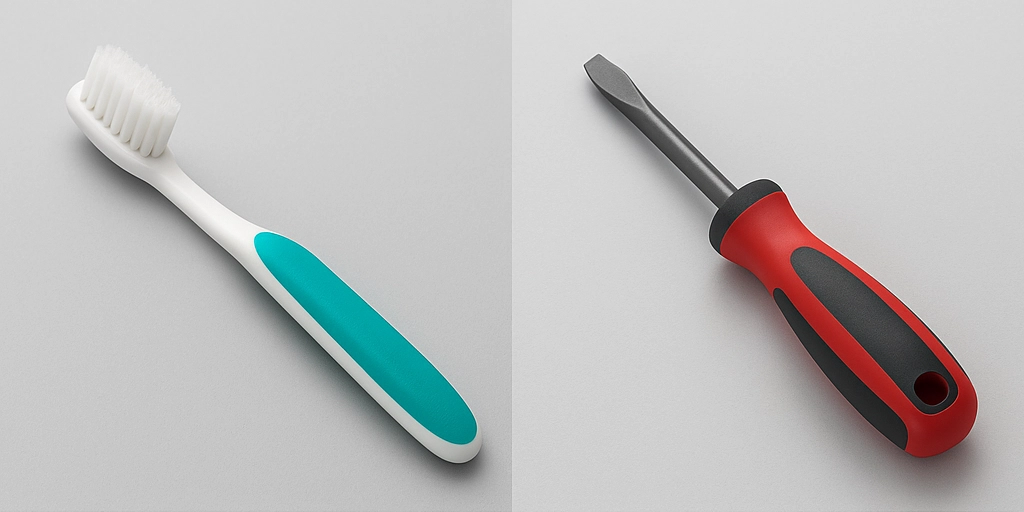
Applications & Advantages
Troubleshooting & Solutions
Substrate Deformation
Thin rigid parts may warp under high injection temperatures or TPE shrinkage. Solution: Adjust gate positions or add reinforcing ribs to the rigid part.
Poor Adhesion (Delamination)
Often occurs at long flow paths far from the gate. Solution: Increase injection temperature, improve material flow, or optimize gate design.
Blooming / Migration
Visible white residue or oil on surface. Solution: Optimize TPE compounding system and ensure compatibility between materials.