

Why TPR Materials are the Ideal Solution for Your Design Challenges
Technical Guide for Product Designers & R&D Professionals
1. Exceptional Overmolding Compatibility
During the development of handheld devices or sealing components, TPR exhibits powerful chemical bonding capabilities. Achieve robust physical integration without the need for additional adhesives or mechanical fasteners.
- BOM Optimization: Significantly reduces part count and assembly labor.
- Enhanced Durability: Prevents delamination and ingress (waterproofing) over long-term use.
- Design Aesthetics: Enables seamless multi-material integration and soft-touch ergonomics.
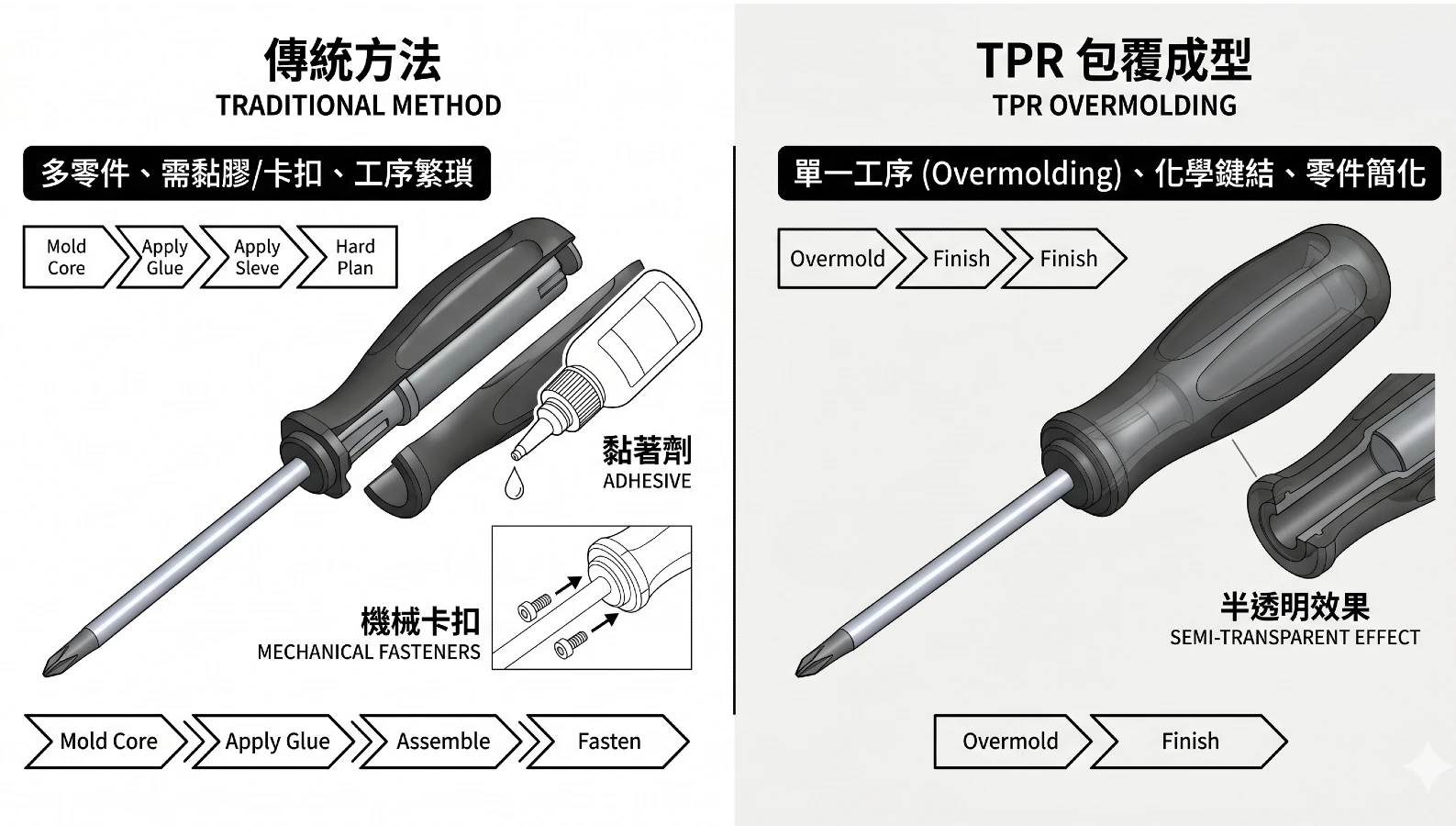
Fig 1: Process simplification: TPR Overmolding vs. Traditional Assembly
2. Precise Hardness Engineering & Tactile Feedback
TPR offers an extensive range of Shore A hardness, from ultra-soft gel textures to semi-rigid structural elements. This allows designers to precisely define friction coefficients and damping properties within a single product line.
Based on U-Pellet’s specifications, engineers can quickly identify the ideal material distribution for grip, wear resistance, or shock absorption requirements.
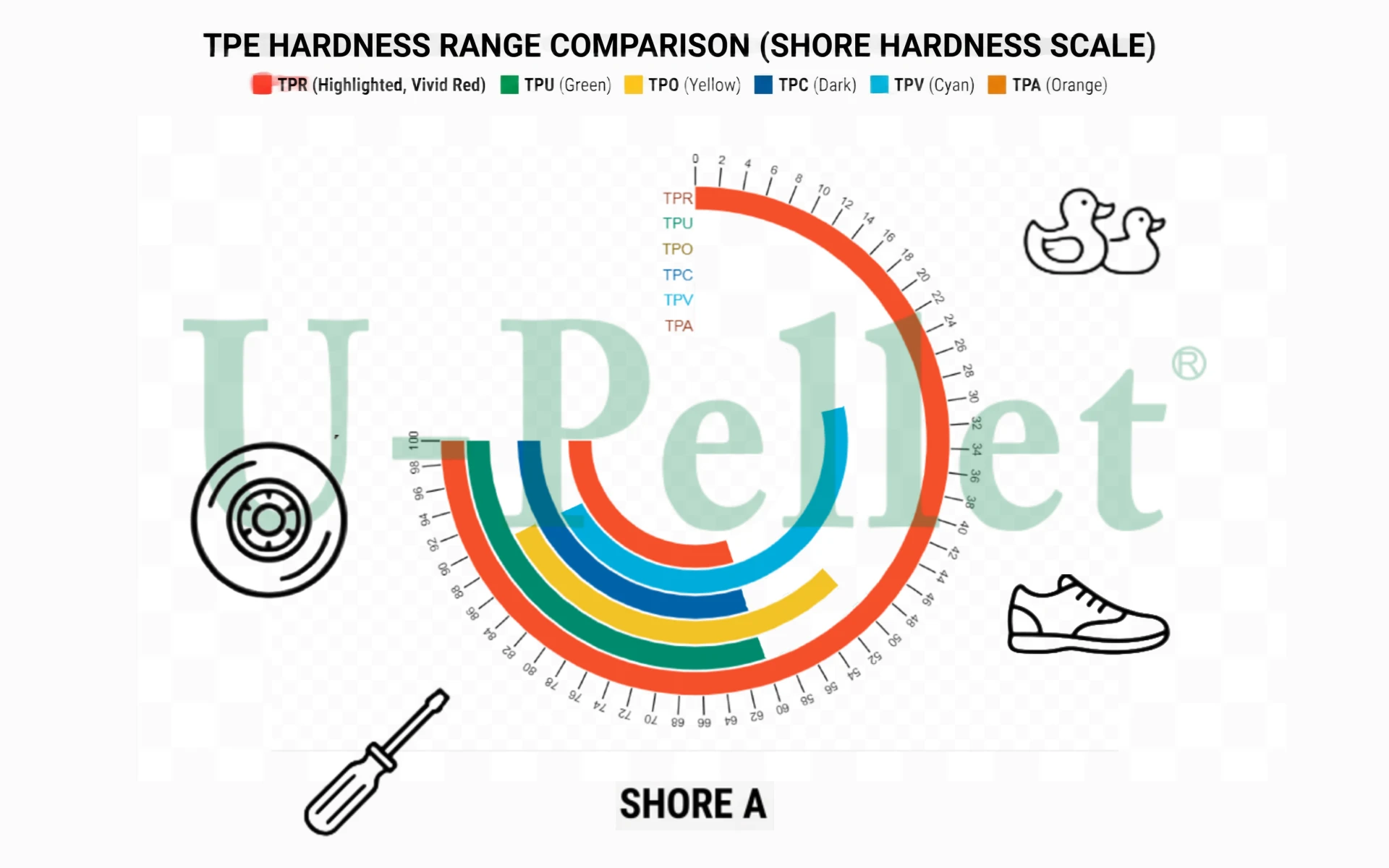
Fig 2: Wide Shore A Hardness coverage of TPR materials
3. Critical Physico-Chemical Performance Data
| Processing Efficiency | No vulcanization required; short injection cycle times; 100% recyclable scrap material. |
|---|---|
| Chemical Resistance | Excellent resistance to water, diluted acids, and bases across various harsh environments. |
| Tactile Performance | Superior anti-slip properties and premium "Soft-touch" feel for enhanced HMI (Human-Machine Interface). |
| Compression Set | Exceptional elastic recovery, maintaining sealing integrity over prolonged mechanical stress. |
Technical Summary: TPR allows you to achieve "Rubber performance at Plastic processing speeds." It is the strategic material choice for dynamic sealing, shock protection, and ergonomic excellence.
